
A direct to garment printer (DTG) is usually on your shortlist when you want high-detail prints, fast setup, and the flexibility to produce small runs (even single pieces) without screens.
This guide is written for buyers who are comparing DTG as a method and evaluating vendors. You’ll learn what DTG is, which garments work best, where DTG fits in production, and what to do next (demo/quote) without drowning in specs.
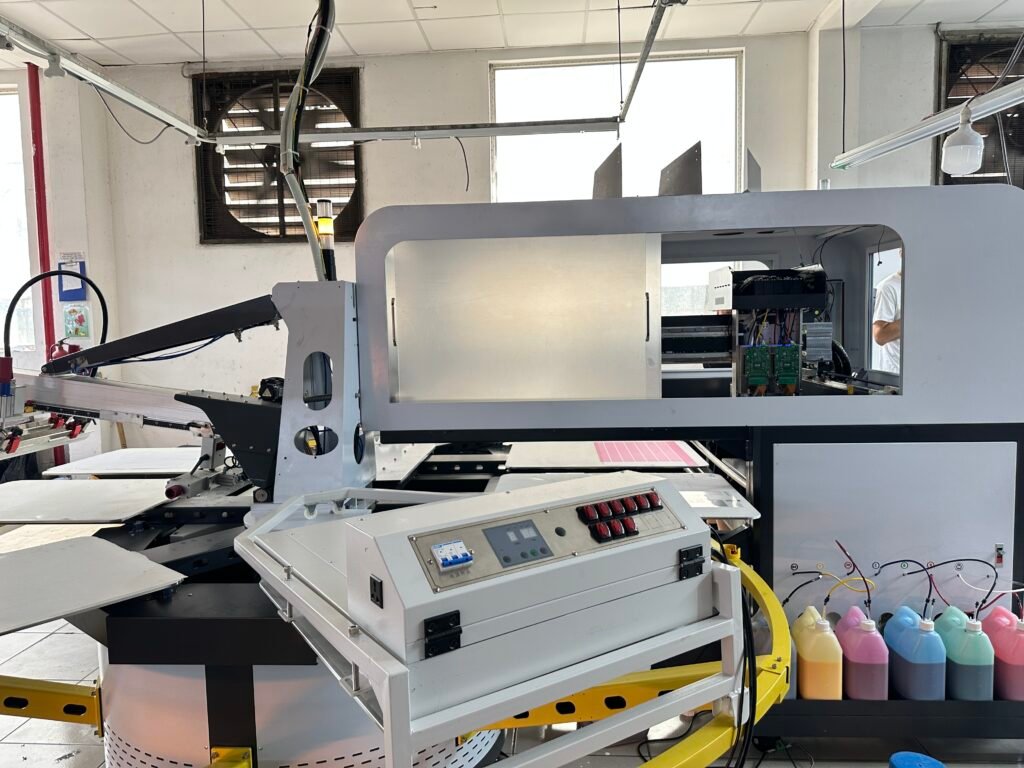
DTG printer: What it is and how it works
A Direct to Garment (DTG) printer is a specialized inkjet printer that sprays textile inks directly onto a garment (most commonly t-shirts). Instead of making screens, the design prints straight from your file, which is why DTG is so popular for detailed artwork and short runs.
Most DTG workflows follow the same three stages:
- Pretreat (often required for dark garments): helps inks bond and improves vibrancy.
- Print: the garment sits flat on a platen while the printer lays down ink.
- Cure: heat sets the ink so it lasts through washes.
If you’re evaluating vendors, pay attention to how they explain pretreating and curing—because that’s where real-world time, labor, and consistency are won or lost.
For a quick look at DTG options by shop size (from entry to production), browse Fluxmall’s DTG category here: https://fluxmall.com/en/catalog/dtg/dtg-printers/. fluxmall.com
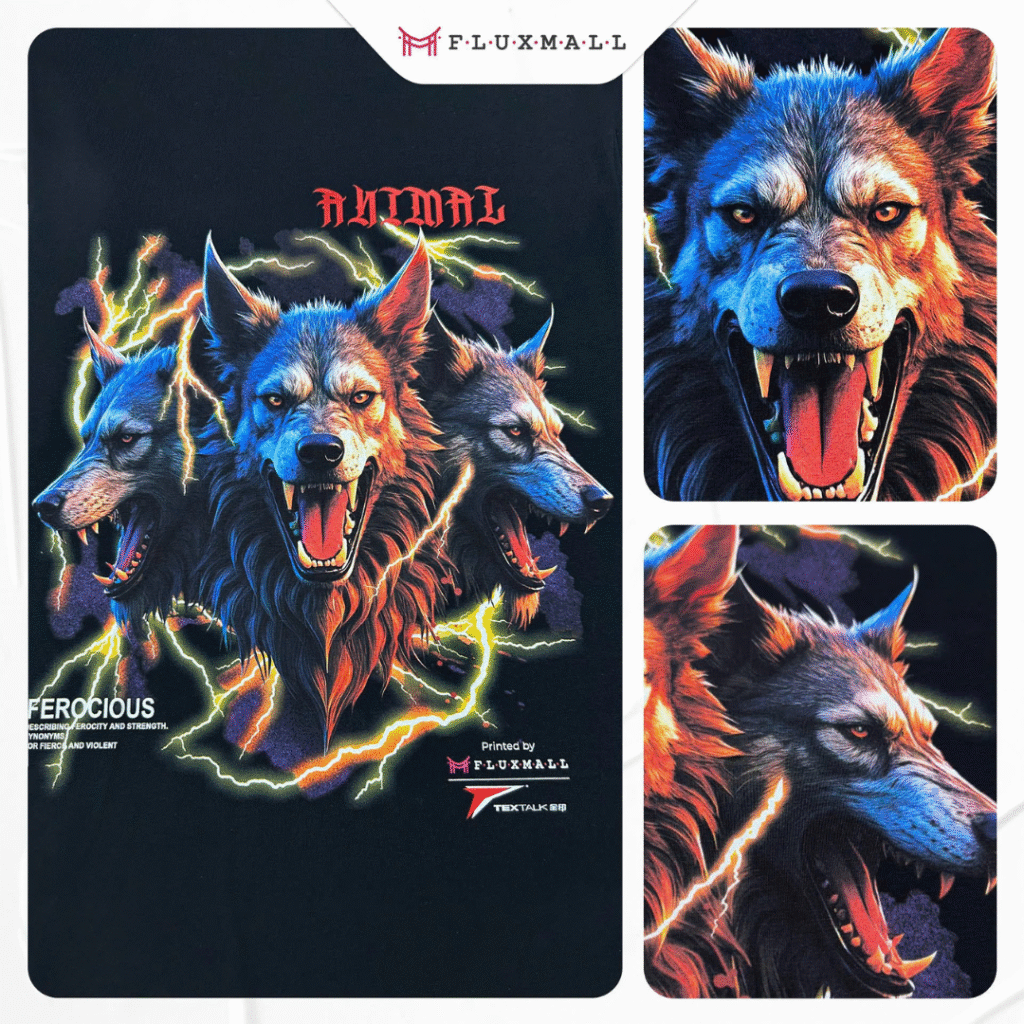
Direct to garment printing machine: What to compare when choosing a vendor
When comparing a direct to garment printing machine, “print resolution” is rarely the deciding factor. Buyers typically get better outcomes by comparing what affects quality consistency, uptime, and throughput.
White ink performance (especially if you print dark shirts)
Dark garments usually need a white underbase. Ask vendors to show dark-shirt samples with solid fills and fine details, and explain how their system keeps white ink running reliably.
Pretreatment workflow (your hidden bottleneck)
Pretreating can be fast—or it can slow the whole shop down. In a demo, ask to see the actual pretreat + dry process, not just the final print.
Curing method (controls durability and production speed)
Curing affects wash durability and output speed. If you plan to scale, the curing setup matters as much as the printer.
If you’re specifically exploring scalable production setups that combine digital detail with higher-volume workflows, Fluxmall’s Textalk hybrid lineup is here: https://fluxmall.com/en/product-tag/textalk/. fluxmall.com
DTG printing for t shirts: Best fabrics and best results
For DTG printing for t shirts, fabric choice is the easiest way to improve print quality without changing anything else.
Best starting point: 100% cotton tees.
Cotton typically absorbs DTG inks well, producing strong color and a soft hand feel.
Also workable: cotton-rich blends.
These often print well, but may require testing profiles and pretreat settings.
More challenging: high-polyester performance fabrics.
DTG can still be used in some cases, but results vary more—especially with vibrancy and wash durability—so you’ll want vendor samples on your exact blanks.
Practical buyer tip: always ask vendors to print on your top-selling garment (same color, fabric, and weight). It removes guesswork immediately.
Direct to Garment printer: Ideal use cases and when DTG makes sense
A DTG garment printer is a strong fit when your business needs flexibility more than maximum speed.
DTG is often the right choice when you do:
- short runs (from one-off personalization to small batches)
- complex, full-color artwork (gradients, photos, illustrations)
- frequent design changes (drops, seasonal lines, influencers, events)
DTG may be less ideal if your business is mostly:
- very high-volume runs of the same design (where other methods can be faster per unit)
- primarily synthetic performance apparel (where results can be inconsistent)
If your goal is to scale into higher output while keeping the ability to print complex designs, you may want to evaluate hybrid production approaches. Fluxmall’s overview of Textalk hybrid printing explains the scaling logic in plain terms: https://fluxmall.com/en/how-hybrid-dtg-printer-help-you-scale-apparel-printing-textalk-printers/. fluxmall.com
DTG printing method: What to do next (demo + quote)
If you’re ready to move from “research” to “decision,” use this simple, buyer-friendly path.
1) Prepare a fair demo test
Ask every vendor to run the same test so you can compare apples to apples:
- One light cotton tee
- One dark cotton tee
- One design file that includes gradients + fine lines + solid fills
You’re looking for consistency, not perfect marketing samples.
2) Request samples that match your real orders
Ask for:
- a dark shirt print (to evaluate white underbase + pretreat quality)
- a wash-care recommendation (curing guidance matters)
- a realistic production estimate (including pretreat + curing time)
3) Ask for a quote that includes the full workflow
A useful quote should cover more than the printer. It should include pretreat recommendations, curing needs, software/workflow expectations, and support terms.
If you’re evaluating Textalk hybrid printers specifically, you can book a dedicated demo here: https://fluxmall.com/en/appointments/book-demo-textalk-printer/. fluxmall.com
Direct to garment printer FAQ
Do I need pretreatment for DTG?
Often yes for dark garments, and sometimes for better vibrancy and durability. Your vendor should recommend pretreat settings based on garment type and artwork.
What’s the best fabric for DTG t-shirts?
Cotton is usually the safest choice for consistent results. Cotton-rich blends can also work well with testing.
Is DTG good for small businesses?
Yes. DTG can be a strong option for small runs, personalization, and fast design turnaround. The key is choosing a setup (or a vendor) that matches your expected volume.
What should I ask in a DTG demo?
Ask to see: pretreatment, dark-shirt printing, curing approach, maintenance expectations, and realistic throughput (not just peak printer speed).
Quick next step
If you want to compare options quickly, start with Fluxmall’s DTG printer selection page, then shortlist 2–3 models/vendors for samples and demos: https://fluxmall.com/en/catalog/dtg/dtg-printers/.